



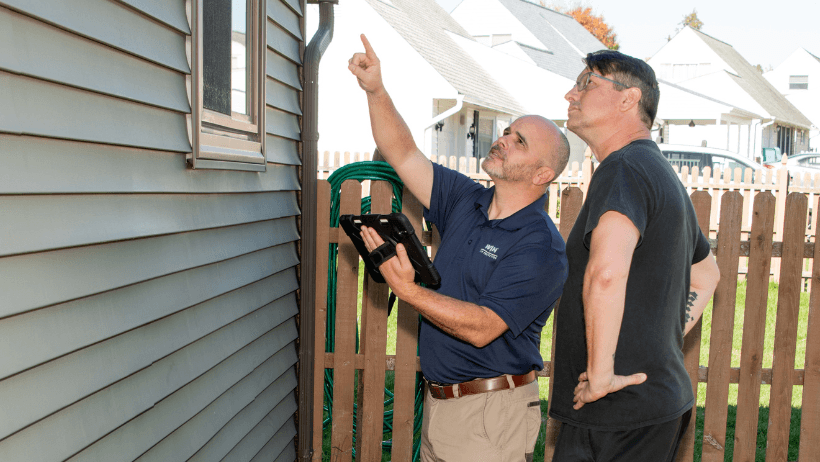
If you’ve bought or sold a home recently, you probably know that the home inspection can be one of the most important steps in the transaction.
But according to Amy Mitchell, President of the Northeast Tennessee Association of REALTORS®, something has changed during the inspection process — and it isn’t necessarily the inspection itself.
It’s the buyer.
Home inspectors are still doing what they’ve always done: taking a closer look at the property and helping buyers understand what they are purchasing. What has changed is the way many buyers are looking at the information they receive.
And in today’s market, that makes sense.
Buyers Are Thinking Beyond the Mortgage Payment
For many buyers, figuring out whether they can afford a home starts with the monthly payment.
But the mortgage is only part of the equation.
Buyers also have to consider the down payment, closing costs, homeowners insurance, property taxes, moving expenses and the ongoing costs of maintaining a home.
That can leave less room in the budget for an unexpected $5,000, $10,000 or $20,000 repair shortly after closing.
So when an inspection reveals a significant issue, buyers may look at that problem differently than they would have a few years ago.
A buyer might love the house. They might be comfortable with the monthly payment. But if the inspection reveals that the roof is nearing the end of its useful life, there is an electrical concern, or a major plumbing or HVAC issue could be on the horizon, the buyer has to consider the bigger financial picture.
The question becomes:
“Can I afford to buy this home?”
But increasingly, buyers are also asking:
“Can I afford to own this home?”
An Inspection Isn't Meant to Find Everything Wrong With a House
There is an important distinction between what a buyer sees during a showing and what an inspector discovers.
If the flooring is worn, the kitchen is dated, the windows are older or the deck needs some attention, those conditions are generally visible before an offer is made.
A buyer can take those things into account when deciding what the home is worth to them and how much they are willing to pay.
The inspection serves a different purpose.
It gives the buyer an opportunity to learn more about things they couldn't reasonably see or evaluate during a typical showing.
For example:
- Is there evidence of a plumbing problem?
- Are there electrical concerns?
- What is happening in the crawlspace?
- Are there issues with the roof that weren't visible from the ground?
- Are major systems functioning properly?
- Are there signs of moisture or other problems that weren't apparent during the showing?
These discoveries can be much more significant than cosmetic items because they can affect the future cost of owning the home.
Does the Seller Have to Fix Everything?
Not necessarily.
No home is perfect, and every house will have maintenance items.
A 30-year-old home shouldn't necessarily be expected to perform like a brand-new construction home. HVAC systems age. Water heaters eventually need to be replaced. Roofs have a useful life. Older homes may have components that don't meet the standards of today's newest construction.
An inspection report can contain a long list of items, but that doesn't mean every item needs to become a negotiation point.
Instead, the buyer, seller and their REALTORS® have to look at the overall picture.
What is the age and condition of the home? How was it priced? Is the issue a safety concern, a major defect or simply routine maintenance? What does the buyer feel comfortable taking on?
Sometimes the result is a repair.
Sometimes the parties negotiate another solution.
Sometimes the condition was already reflected in the price of the home, and nothing changes.
Every transaction is different.
What This Means for Sellers
For sellers, today's buyer mindset makes preparation and pricing especially important.
A buyer who is already stretching their budget may have a very different reaction to deferred maintenance than a buyer who has plenty of cash available after closing.
That doesn't mean sellers need to renovate an entire house before putting it on the market.
But it can be worthwhile to address known maintenance issues and understand the condition of the home before listing.
Taking care of smaller problems ahead of time may help prevent them from becoming distractions during the inspection process. It also gives sellers a better understanding of what they are putting on the market.
Most importantly, pricing the home appropriately for its condition matters.
A home that needs updates can absolutely be a great purchase for the right buyer. But the price needs to make sense in the context of the home's condition, location and potential future expenses.
What This Means for Buyers
For buyers, an inspection should provide information — not necessarily a list of reasons to panic.
Every inspection report is going to contain items worth noting. The key is understanding which issues are routine maintenance and which could represent significant future costs.
That's where having experienced professionals involved can make a difference.
Your REALTOR® can help you put the inspection findings into the context of the home, the purchase price and the overall transaction. Your inspector can explain what they found and identify areas that may warrant further evaluation by a qualified specialist.
The goal isn't to buy a perfect house.
The goal is to understand what you're buying.
The Bigger Picture
Today's buyers are paying close attention to value, but value isn't simply the purchase price.
It's the entire cost of owning the home.
The mortgage payment matters. So do insurance, taxes, utilities, maintenance and potential repairs.
That's why the home inspection can be such an important part of the process. It may uncover information that changes how a buyer views the financial commitment they are making.
Sometimes that leads to a repair request. Sometimes it leads to further negotiations. And sometimes it simply gives the buyer confidence that they understand the home they're purchasing.
The inspection itself hasn't necessarily changed.
The buyer's perspective has.
And as buyers continue to pay close attention to their overall housing costs, understanding the condition of a home — before committing to own it — is more important than ever.
Market data provided by the Northeast Tennessee Association of Realtors® (NETAR) Buyers Are Looking Closer, Tighter Budgets May Be Why - Northeast Tennessee Association of REALTORS® NETAR represents more than 1,800 members and 100 business partners involved in residential and commercial real estate throughout Northeast Tennessee and Southwest Virginia.
Check out this article next